
Reviving the Little South Branch
Project Highlights
Project Type
In-Stream Habitat Improvement & Erosion Control
River Miles to be Restored
5 Miles Total (Five Sites Per Year for Five Years)
Location of Project
Little South Branch of the Pere Marquette River
(Newaygo County)
Wildlife to be Benefited
Birds (waterfowl, wading birds, shorebirds, marsh birds), reptiles (snakes, turtles, five-lined skink), amphibians (frogs, toads, salamanders), mammals (muskrat, beaver, river otter, mink), Brown Trout, Brook Trout, Rainbow Trout, Coho Salmon, Chinook Salmon, Spotted Turtle, semi-aquatic reptiles and amphibians, and cold-water aquatic macroinvertebrates
Little South Branch of the Pere Marquette (In-Stream Habitat Improvement)
Project Overview
The Little South Branch of the Pere Marquette River is known for its cold, clear water and exceptional fisheries. But like many Northern Michigan rivers, sections of the stream have lost the natural features that once supported healthy habitat for fish and wildlife. To help restore this important tributary to the Pere Marquette River mainstem, dedicated private donors and CRA launched the Little South Branch Pere Marquette River Habitat Improvement Project — a multi-year effort focused on strengthening river health through strategic in-stream habitat improvements.
Work began last summer and will continue over the next five years, with crews installing large wood along a five-mile stretch of river between Forman Road and James Road. These installations mimic natural log jams and fallen trees that historically shaped the river’s flow, stabilized banks, and created critical habitat for fish and wildlife.
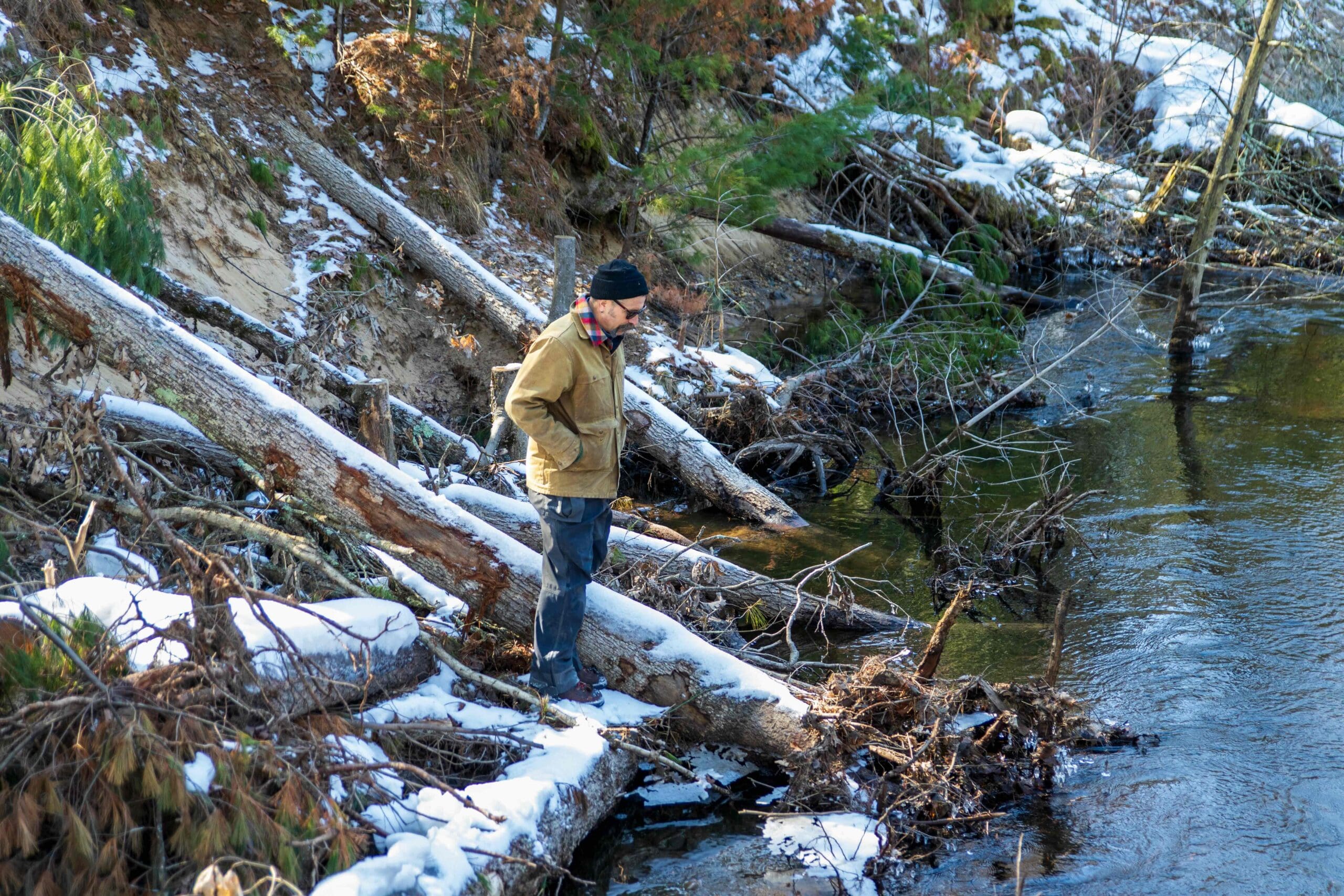
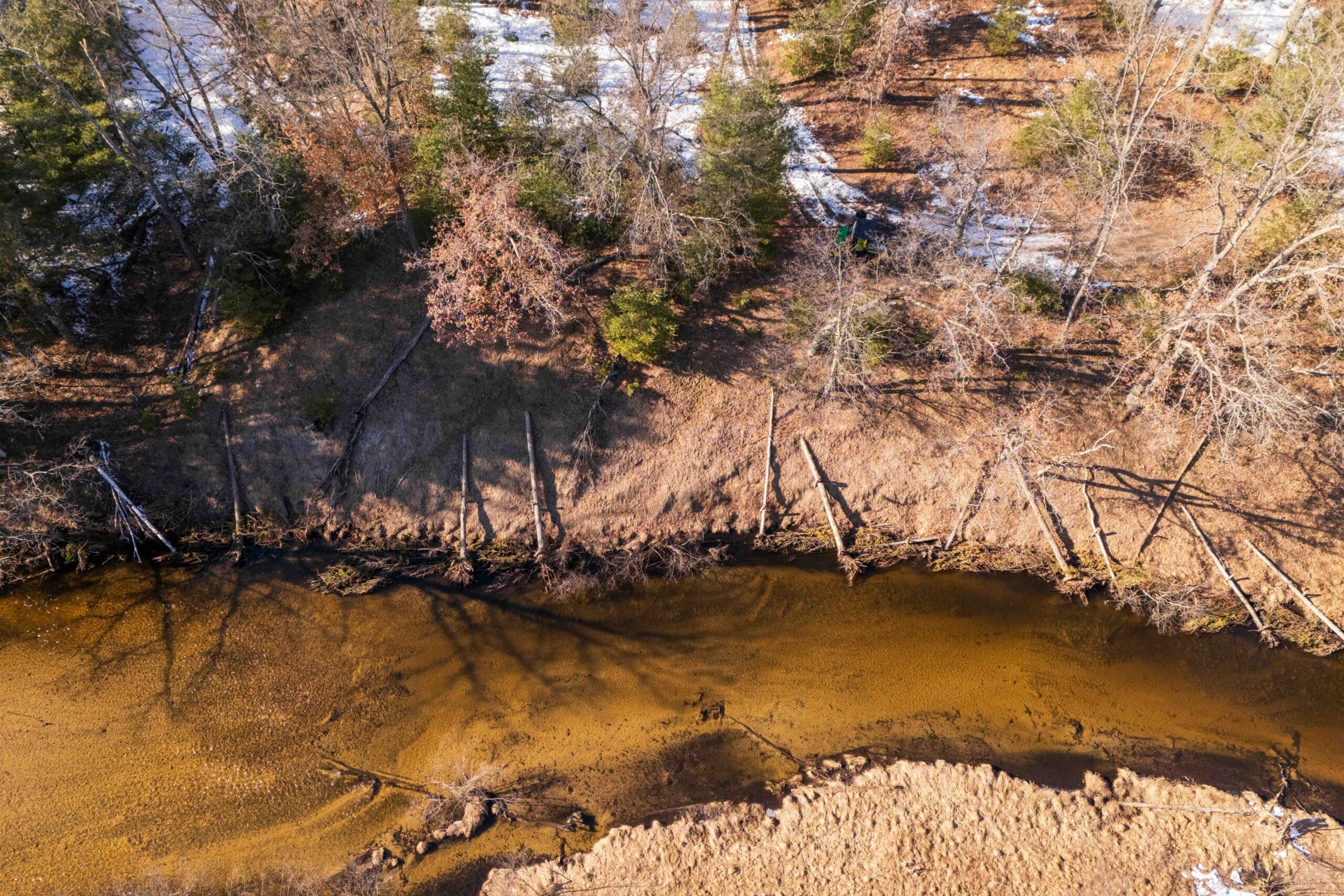
Large wood with attached rootwads line the eroding riverbank.

Large wood stabilizes a river bend along the Little South Branch of the Pere Marquette River.
A 2024 evaluation found this section of river lacks in-stream large wood — an essential component of healthy stream ecosystems in forested landscapes. Without it, streambanks become unstable and excess sediment enters the channel. By carefully placing whole trees, including rootwads and tops, along eroding banks, the project will slow water velocity, reduce erosion, and restore natural river function. Beyond stabilizing banks, added wood provides cover and resting areas for trout, improves spawning habitat, enhances overwinter survival, and supports aquatic insects that form the foundation of the river’s food web. The work also creates habitat for turtles, birds, and other wildlife that depend on healthy riparian ecosystems.
CRA works closely with local landowners and partners to design each installation, ensuring restoration efforts protect sensitive areas while maintaining recreational access. By using natural materials sourced on-site, the project strengthens long-term ecosystem resilience and supports a healthier, more dynamic river system for the region.
This project is ongoing. Stay tuned to CRA’s social media channels and this project page for updates as restoration work continues.
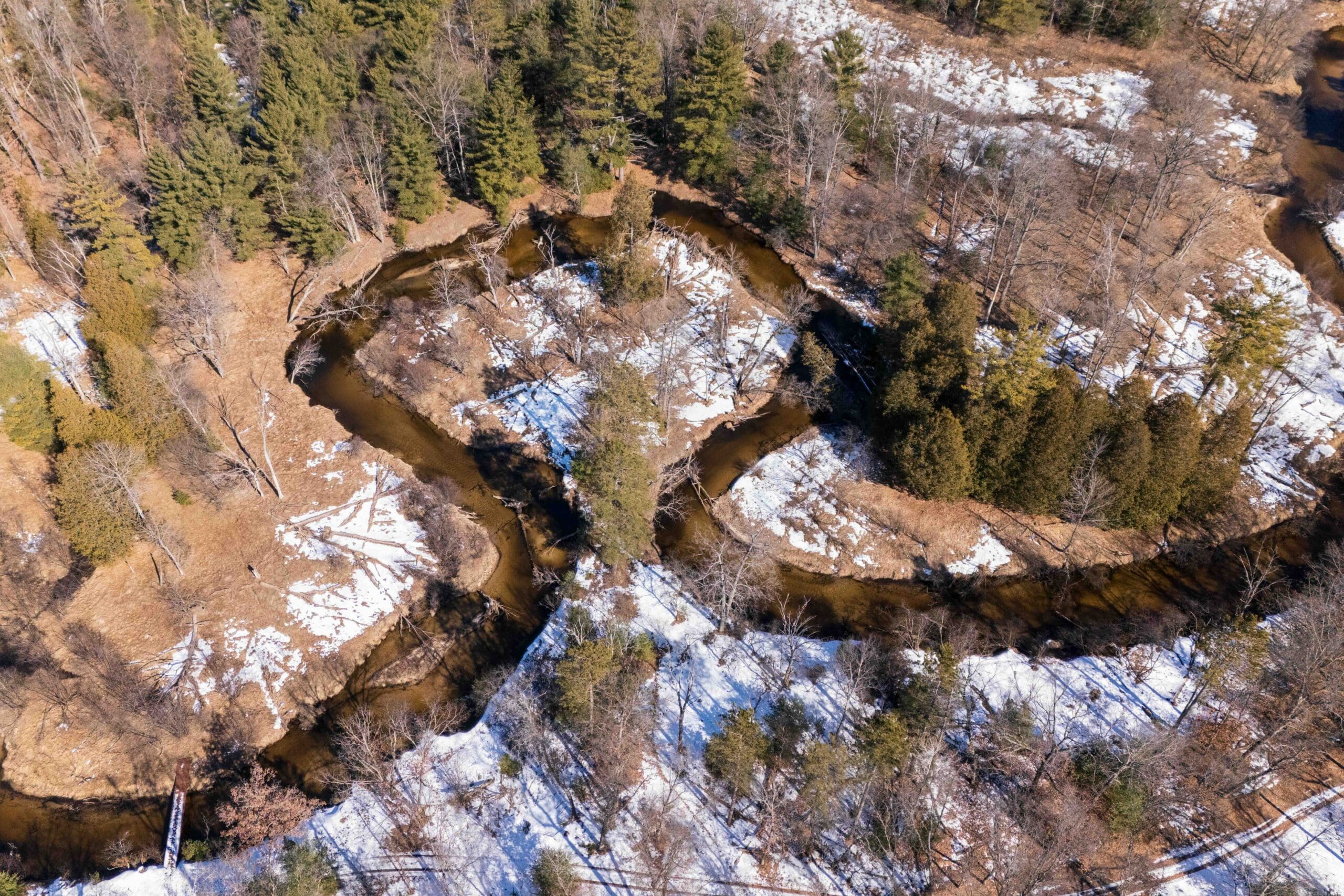
In summer 2026, this upstream section will be the focus of the next five in-stream habitat installations.
Projects like this are not possible without the help of our funders and partners. We’d like to send a special thank you to:
Private landowners | Pere Marquette Watershed Council | Charles A. Fellows Chapter of Trout Unlimited | Pere Marquette Chapter of Trout Unlimited | Lake County Riverside Property Owners Association | Lake County Sheriff’s Department | Great Lakes Energy | Restaurant 876 (Baldwin) | Michigan Department of Natural Resources (MDNR) | Michigan Department of Environment, Great Lakes, and Energy (EGLE) | Knoop Excavating