
A New Chapter for Mitchell Creek
Project Highlights
Project Type
Stream Channel Restoration, Stream Crossing Replacement/Removal, Wetland Restoration, In-Stream Habitat Enhancement
River Miles to be Restored/Reconnected
6.5 Miles
Location of Project
Mitchell Creek (Mitchell Creek Meadows Nature Preserve)
Grand Traverse County, Michigan
Wildlife to be Benefited
Brook Trout, Native Fish Species, Aquatic Organisms, Wetland Birds, Amphibians, and Pollinators
Mitchell Creek Meadows
Project Overview
The Mitchell Creek Watershed is the third-largest tributary watershed flowing into Grand Traverse Bay and plays a vital role in one of Northern Michigan’s most ecologically significant freshwater systems. Supporting both coolwater and coldwater fisheries, the watershed is critical to the health of the bay and the diverse fish and wildlife it sustains.
For decades, portions of the watershed flowed through a golf course landscape shaped by drainage systems, stream alterations, and infrastructure that disconnected fish habitat and limited the creek’s natural function. Today, that same property has become Mitchell Creek Meadows: The Don and Jerry Oleson Nature Preserve, where conservation partners are working to restore ecological function, improve water quality, and create healthier habitat for fish and wildlife.
In partnership with the Grand Traverse Regional Land Conservancy, the Grand Traverse Band of Ottawa and Chippewa Indians, The Watershed Center Grand Traverse Bay, and numerous local contractors, Conservation Resource Alliance is helping transform the former Mitchell Creek Meadows golf course into a regional showcase for watershed restoration.
What was once managed to maintain fairways, greens, and cart paths is now being reimagined as a thriving natural landscape. Streams that were historically straightened and constrained will be restored to more natural conditions. Undersized and abandoned stream crossings will be removed or replaced to improve fish passage, while native vegetation will be reestablished throughout the property to restore wetlands, stabilize streambanks, improve water quality, and create habitat for fish and wildlife.
Construction is expected to begin in summer 2026, marking an important milestone in the ongoing transformation of Mitchell Creek Meadows.
Project Map
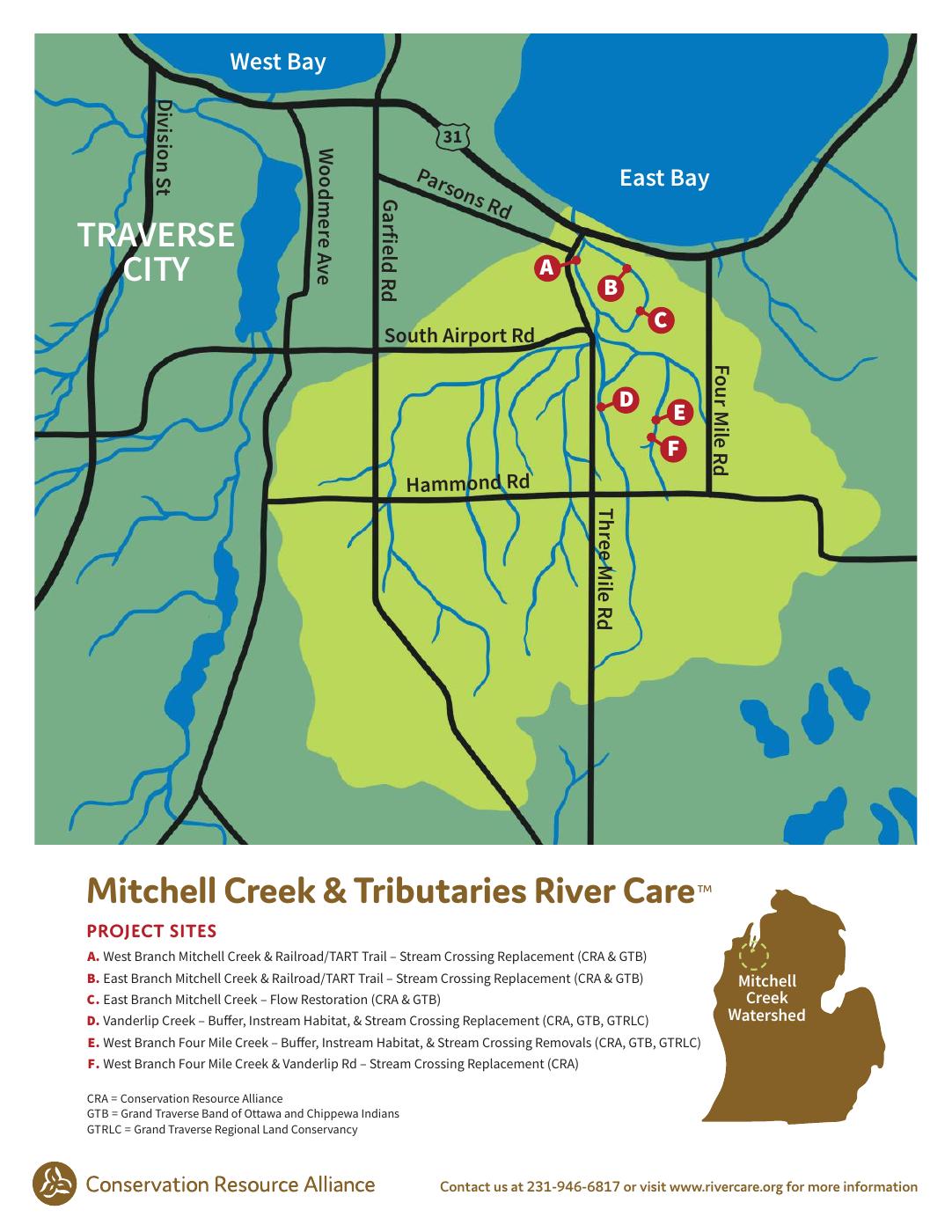
Beyond its ecological benefits, the project will enhance a growing community destination where visitors can experience wetlands, meadows, forests, and streams firsthand. Today, Mitchell Creek Meadows offers opportunities for hiking, birdwatching, wildlife viewing, environmental education, and seasonal hunting, while the universally accessible Looyenga Family Trail and elevated boardwalks provide visitors of all abilities with a chance to explore and connect with this remarkable landscape.
By restoring natural stream processes and reconnecting fragmented habitat, this project will help ensure that Mitchell Creek remains a healthy and resilient watershed for generations to come.
Project Goals
– Reconnect 6.5 miles of stream habitat for brook trout and other aquatic species.
– Remove eight undersized or abandoned stream crossings that restrict aquatic organism passage.
– Restore natural stream channel form through targeted channel re-meandering.
– Improve more than 4,400 feet of stream habitat through strategic large woody debris installations.
– Re-meander over 600 feet of straightened stream.
– Restore riparian wetland habitat through native vegetation enhancement and habitat restoration.
– Monitor fish populations and habitat conditions to document ecological improvements over time.
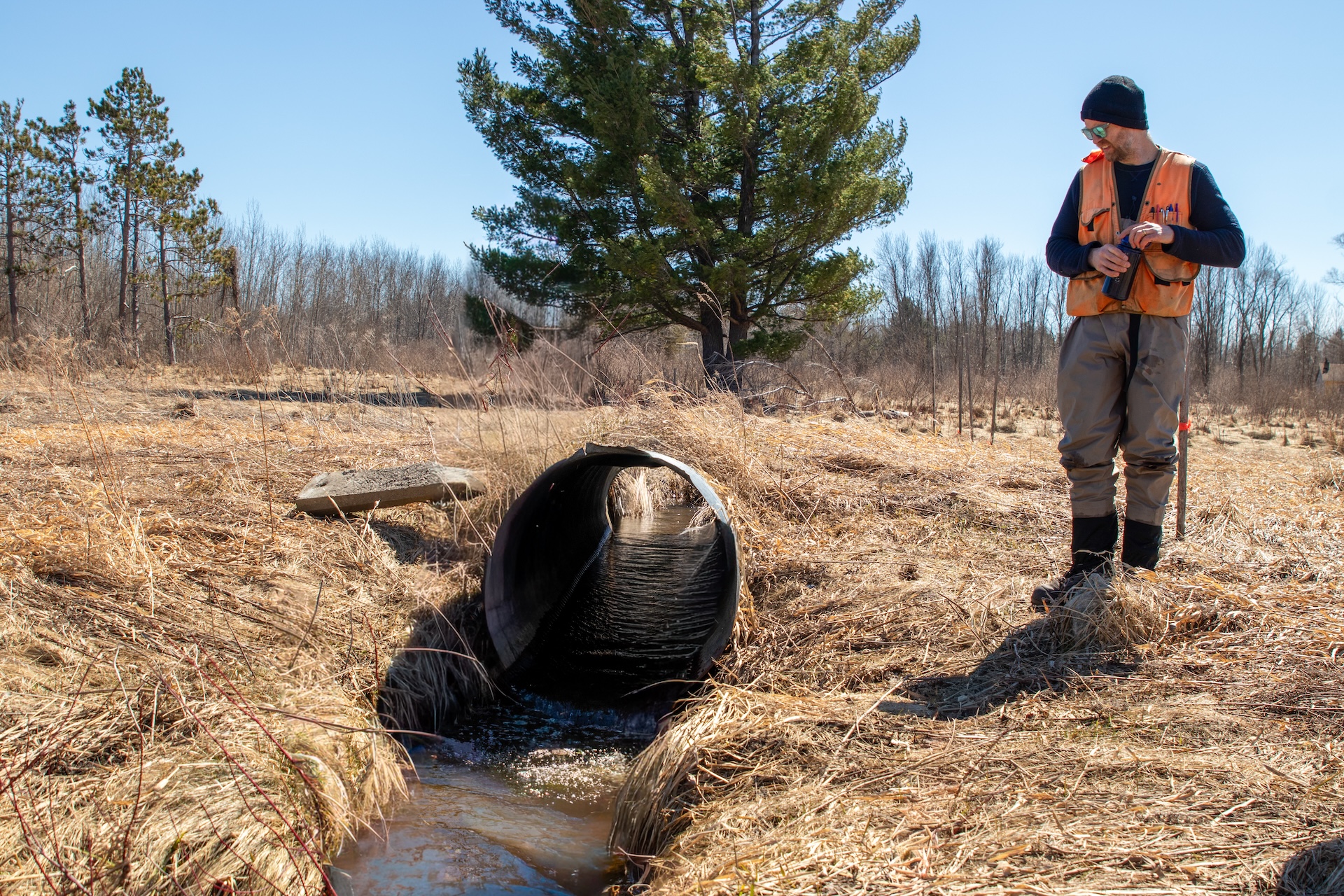
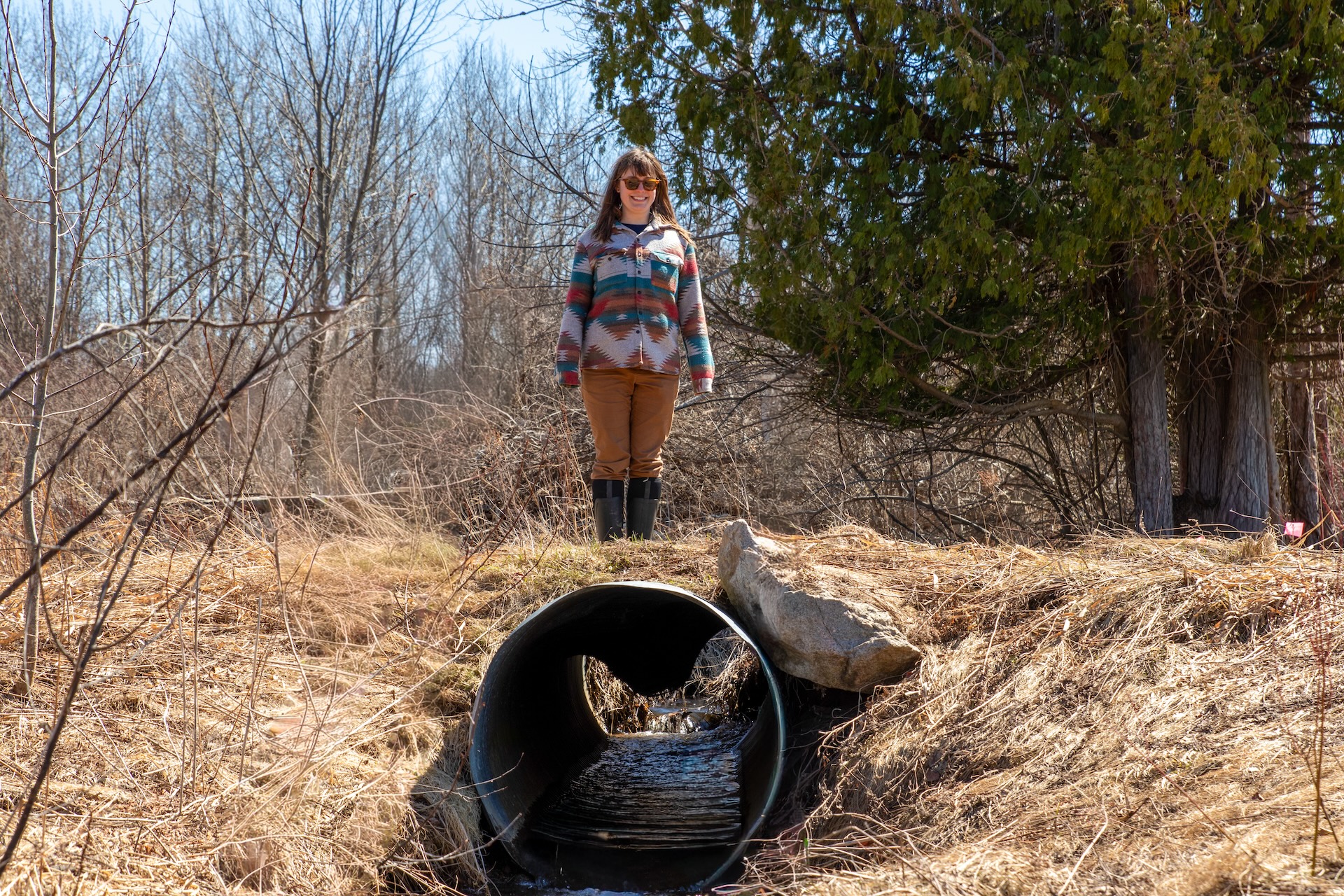
CRA Project Manager Meredith Freeby stands beside an undersized culvert on Vanderlip Creek
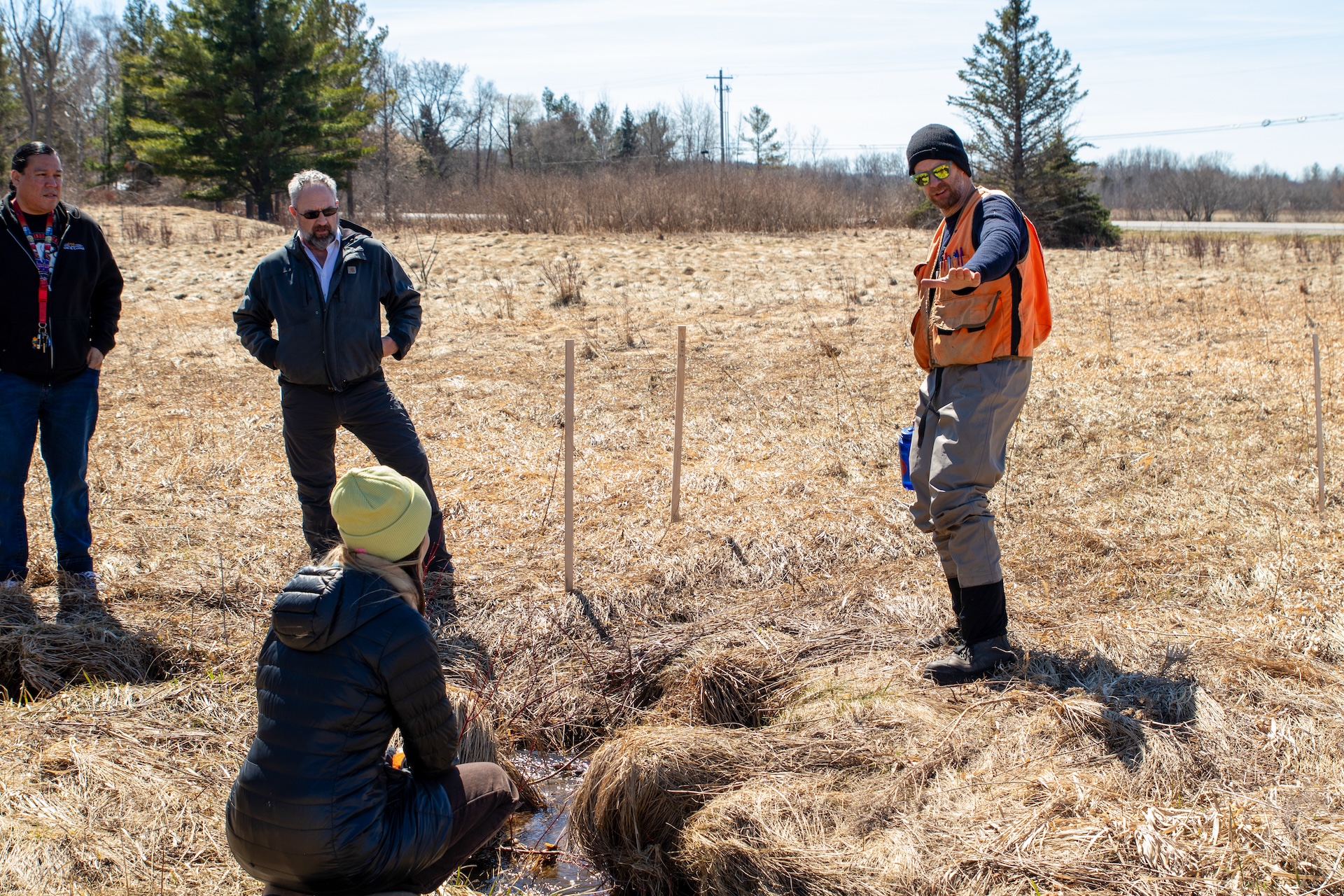
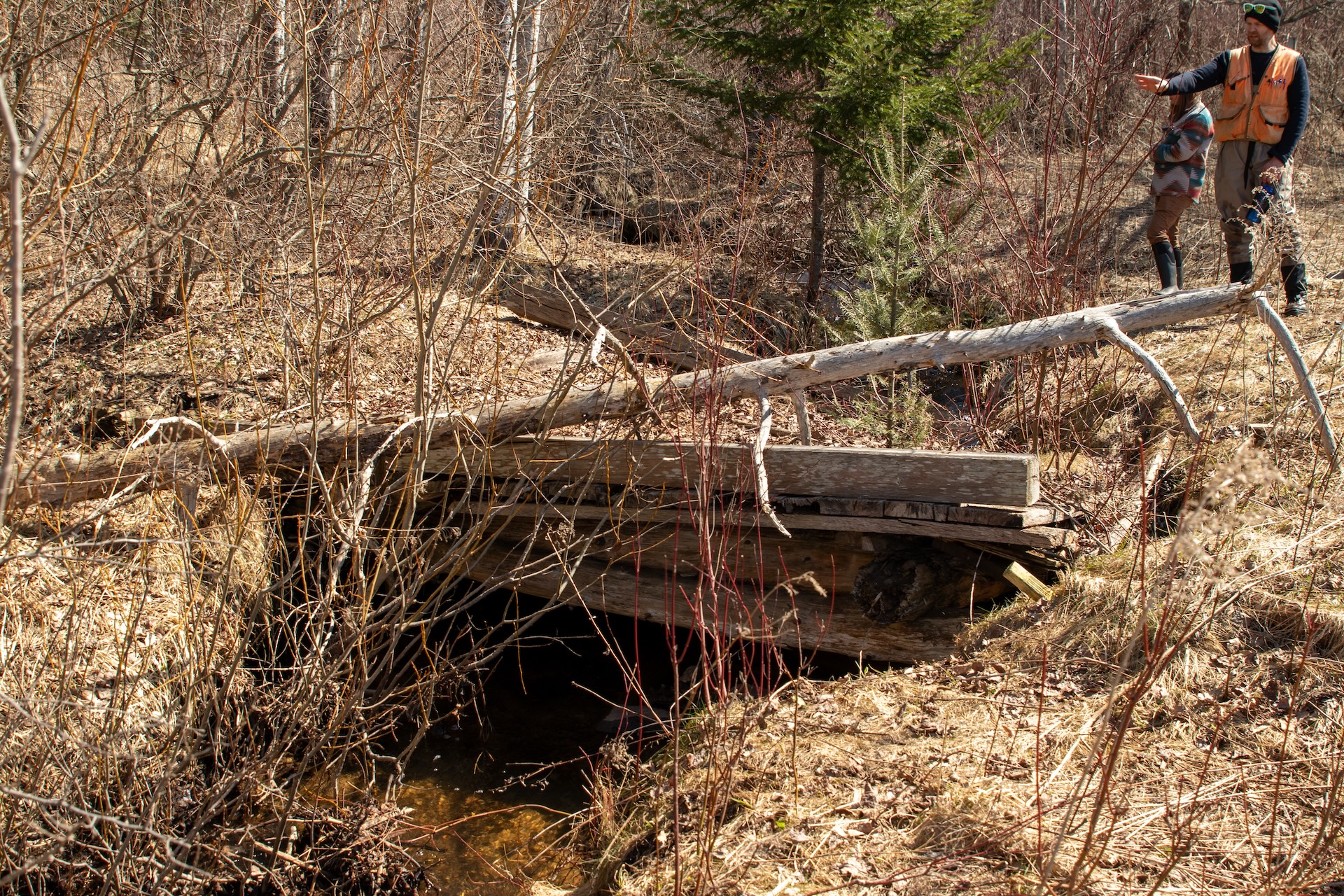
A former golf cart bridge on West Branch Four Mile Creek awaits removal as part of the Mitchell Creek restoration project.
Why It Matters
Healthy rivers depend on more than clean water. Fish and wildlife also need connected habitat, functioning floodplains, and diverse stream features that provide food, shelter, and spawning opportunities.
As one of the fastest-growing regions in the Great Lakes, the Grand Traverse area has a unique opportunity to demonstrate that conservation and community growth can go hand in hand. Mitchell Creek Meadows will serve as a living example of that vision—showing how thoughtful restoration can revitalize waterways, support wildlife, and strengthen the natural resources that make Northern Michigan such a special place.
Projects like this are not possible without the help of our funders and partners. We’d like to send a special thank you to:
Partners: Conservation Resource Alliance | The Grand Traverse Regional Land Conservancy | The Grand Traverse Band of Ottawa and Chippewa Indians | The Watershed Center Grand Traverse Bay
Funders: Grand Traverse Band of Ottawa and Chippewa Indians – Bureau of Indian Affairs (Great Lakes Restoration Initiative – Distinct Tribal Program) | U.S. Fish and Wildlife Service – Great Lakes Basin Fish Habitat Partnership | National Fish and Wildlife Foundation – Sustain Our Great Lakes Program | Rotary Charities | Grand Traverse Regional Community Foundation | Wade Trim Foundation
With support from River Care Funders: Packaging Corporation of America | DTE Foundation | Serra Family Foundation | Andrew R. and Janet F. Miller Foundation | Walters Family Foundation | The Brookby Foundation | Bells Brewery