
Restoring Connectivity Across the Upper Manistee River Watershed
Project Highlights
Project Type
Stream Crossing Replacements, Fish Passage Restoration, Watershed Connectivity
Four Conservation Resource Alliance-led projects, Two partner-led projects
River Miles Connected
46 Miles of Coldwater Habitat
Location of Project
Upper Manistee River Watershed (Kalkaska, Grand Traverse & Wexford Counties)
Wildlife to be Benefited
Brook Trout, Arctic Grayling, Salmon, Steelhead, Native Fish Species, Freshwater Mussels, Wood Turtles, Spotted Turtles & Other Aquatic Wildlife
Tributary to the North Branch & Grass Lake Road
Maple Creek & Sharon Road
Fife Lake Outlet & Ramsey Road
Fife Lake Creek & County Line Road (E 2 Road)
Project Overview
The Upper Manistee River watershed is one of Michigan’s premier coldwater river systems, supporting world-class fisheries, diverse wildlife, and countless recreational opportunities. Its network of rivers and tributaries provides critical habitat for brook trout, salmon, steelhead, freshwater mussels, turtles, and many other native aquatic species.
Like many watersheds across northern Michigan, however, aging and undersized road-stream crossings have fragmented aquatic habitat, disrupted natural stream processes, and increased the risk of erosion and infrastructure failure.
To address these challenges, the Michigan Department of Natural Resources, Conservation Resource Alliance, Trout Unlimited, and local county road commissions are partnering to replace six aging road-stream crossings throughout the Upper Manistee River watershed. Together, these projects will reconnect 46 miles of coldwater habitat, restore natural stream function, improve fish passage, and create safer, more resilient transportation infrastructure for local communities.
During the summer of 2026, Conservation Resource Alliance is leading four of these projects—on Maple Creek, Fife Lake Creek, and a tributary to the North Branch Manistee River. Once complete, these improvements will reconnect critical habitat while benefiting fish, wildlife, and the communities that depend on healthy rivers.
Before Photos:
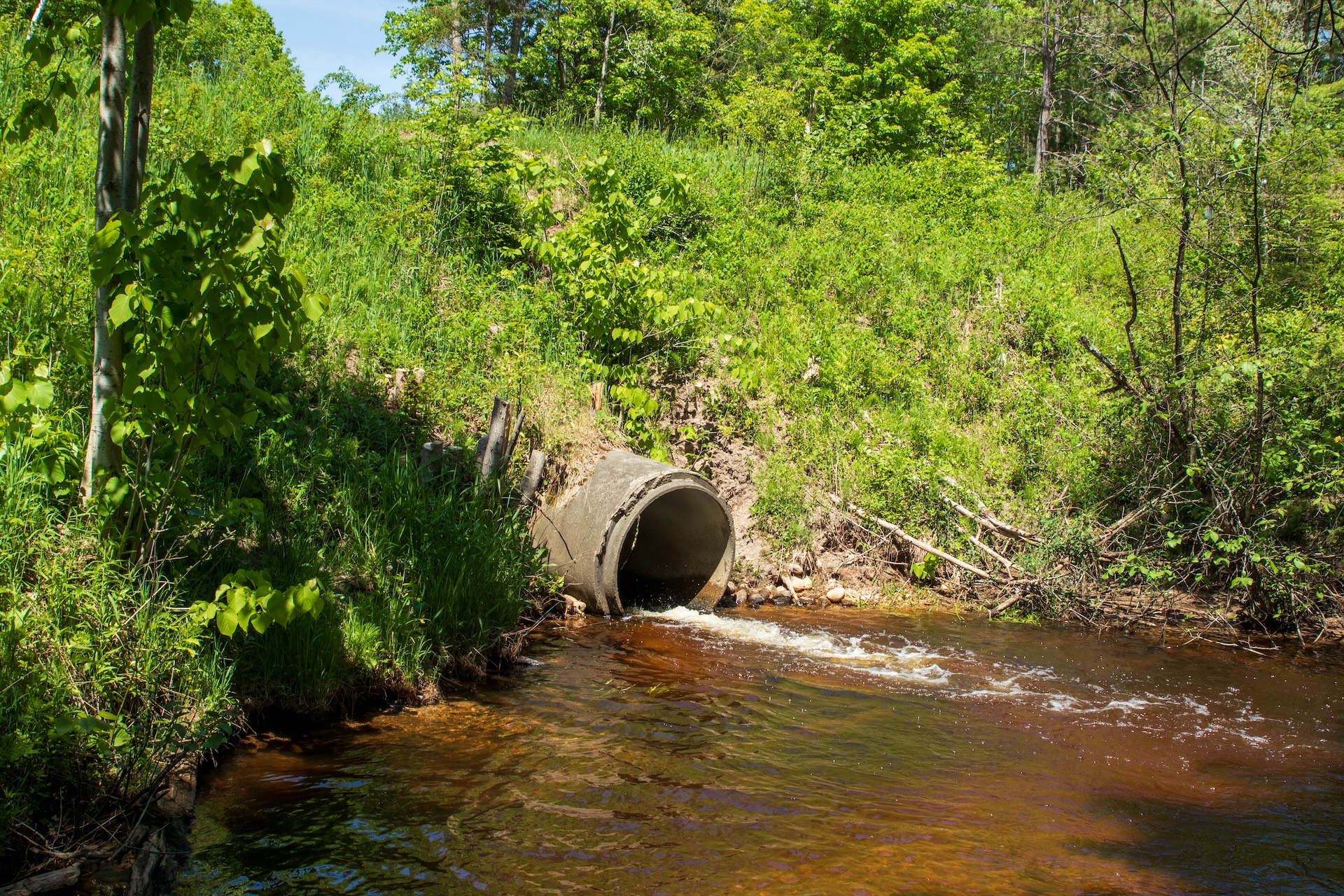
Before: Maple Creek & Sharon Road – An undersized culvert restricts natural streamflow and creates a barrier to fish passage.
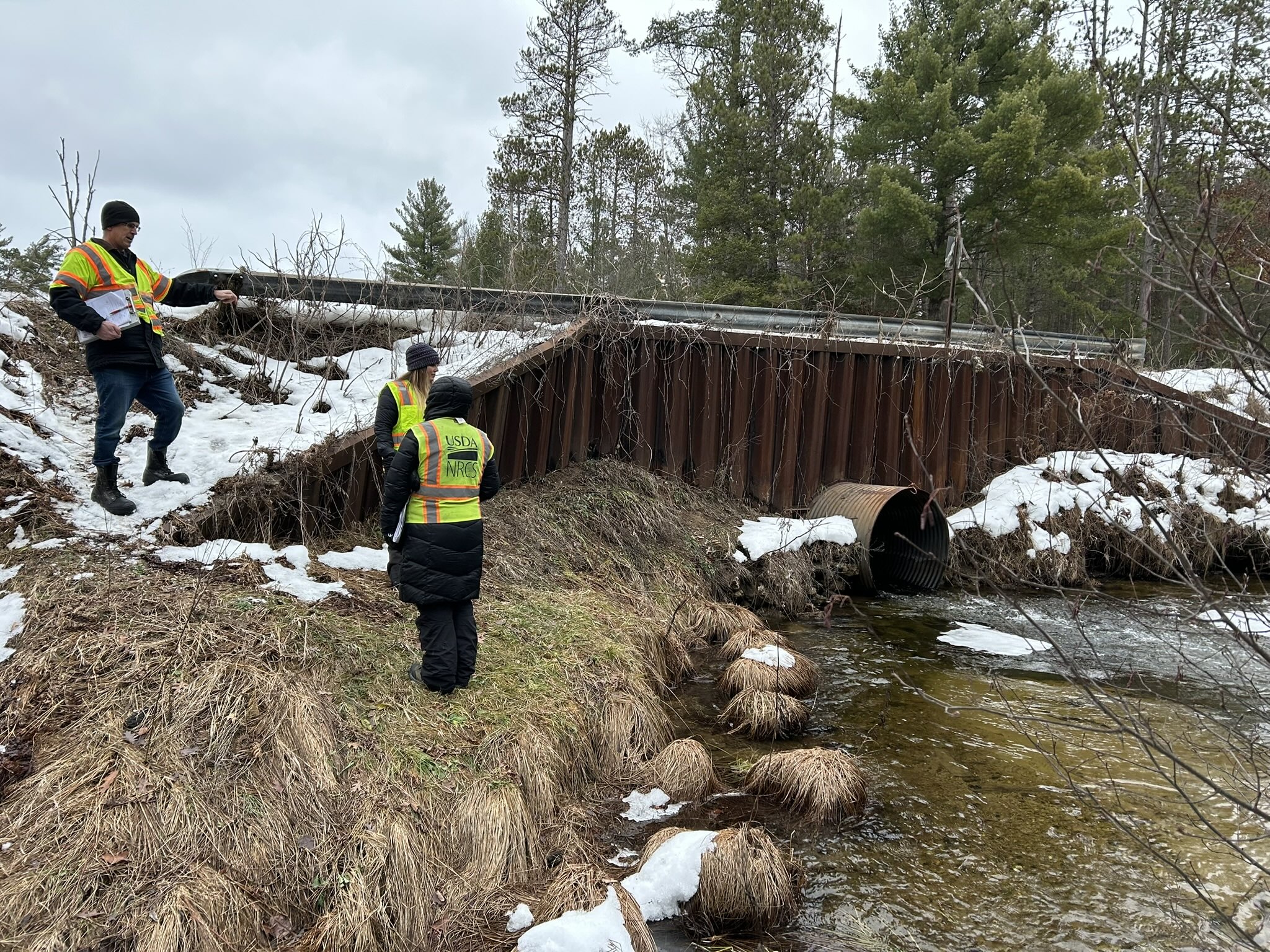
Before: Fife Lake Creek & County Line Road (E 2 Road)
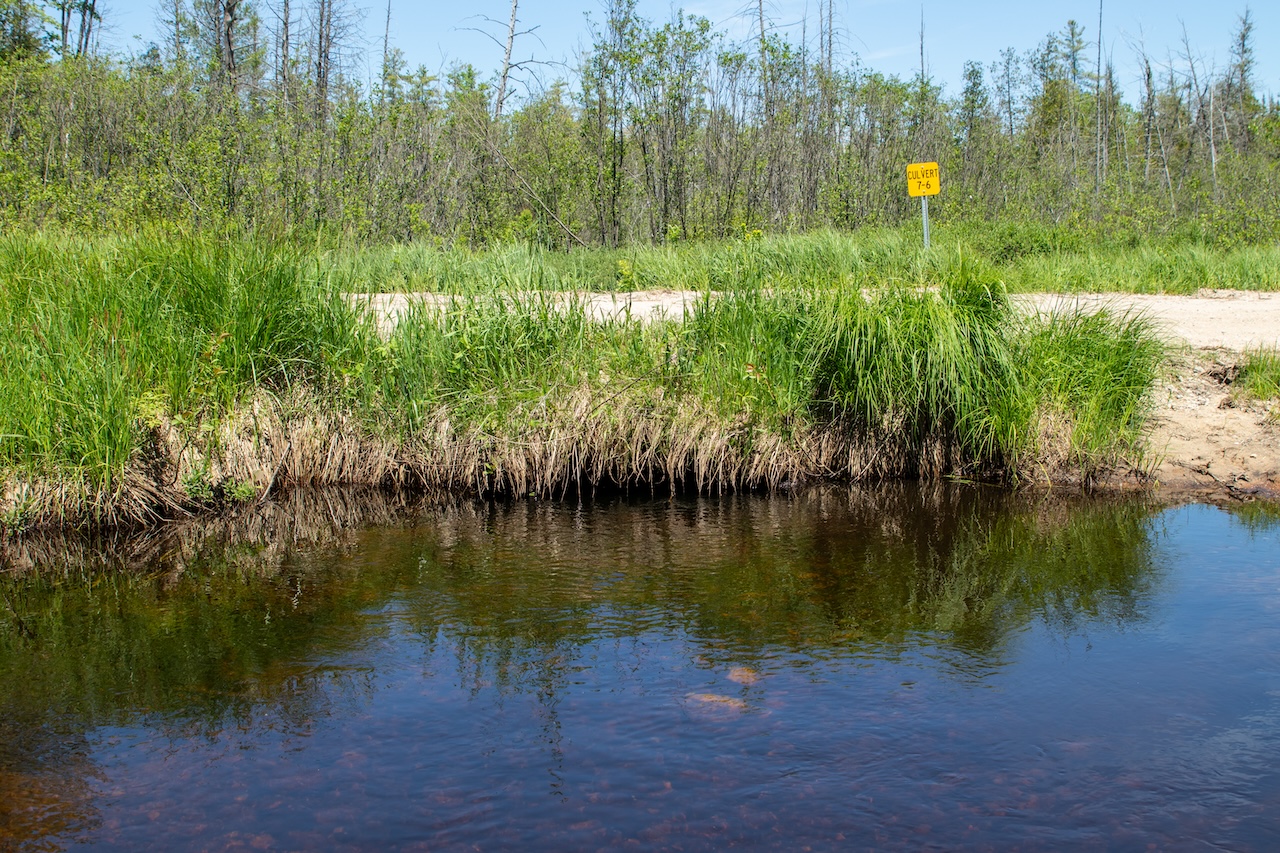
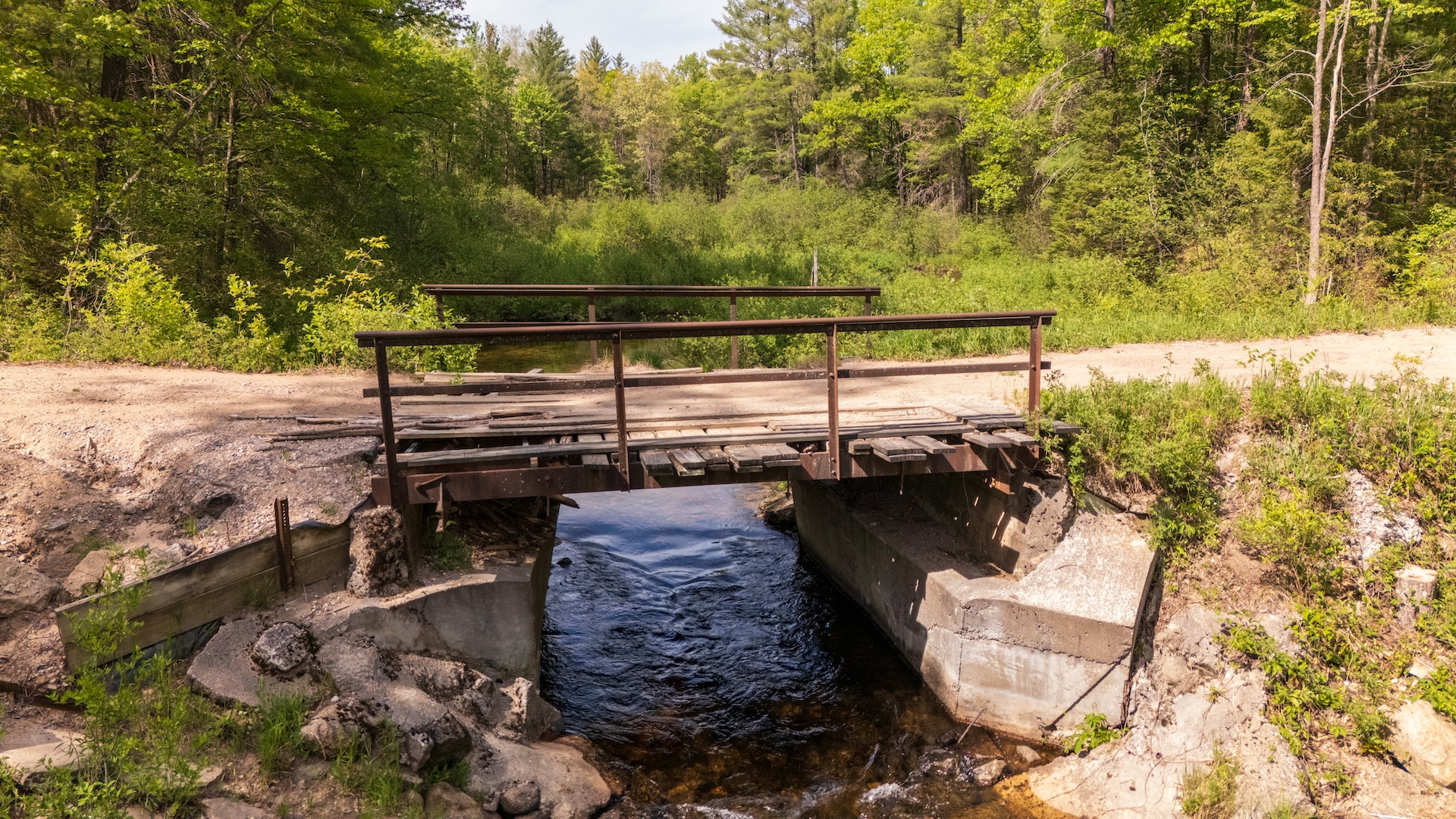
Before: Fife Lake Outlet & Ramsay Road – An aging, deteriorating bridge will be replaced to improve stream connectivity and provide a safer crossing for the community.)
Why This Work Matters
Healthy rivers depend on connected habitat.
When streams are interrupted by undersized culverts or aging infrastructure, fish and other aquatic wildlife lose access to important spawning, feeding, and refuge habitat. These barriers also accelerate erosion, degrade water quality, and increase the likelihood of road failures during major storms.
Replacing these crossings restores the natural movement of water, sediment, fish, and wildlife while creating infrastructure that is better equipped to withstand Michigan’s climate.
The benefits extend well beyond a single species. From brook trout and salmon to freshwater mussels, turtles, and countless aquatic organisms, reconnecting rivers strengthens the entire watershed while improving recreation, fisheries, and water quality for future generations.
Update Fall 2026:
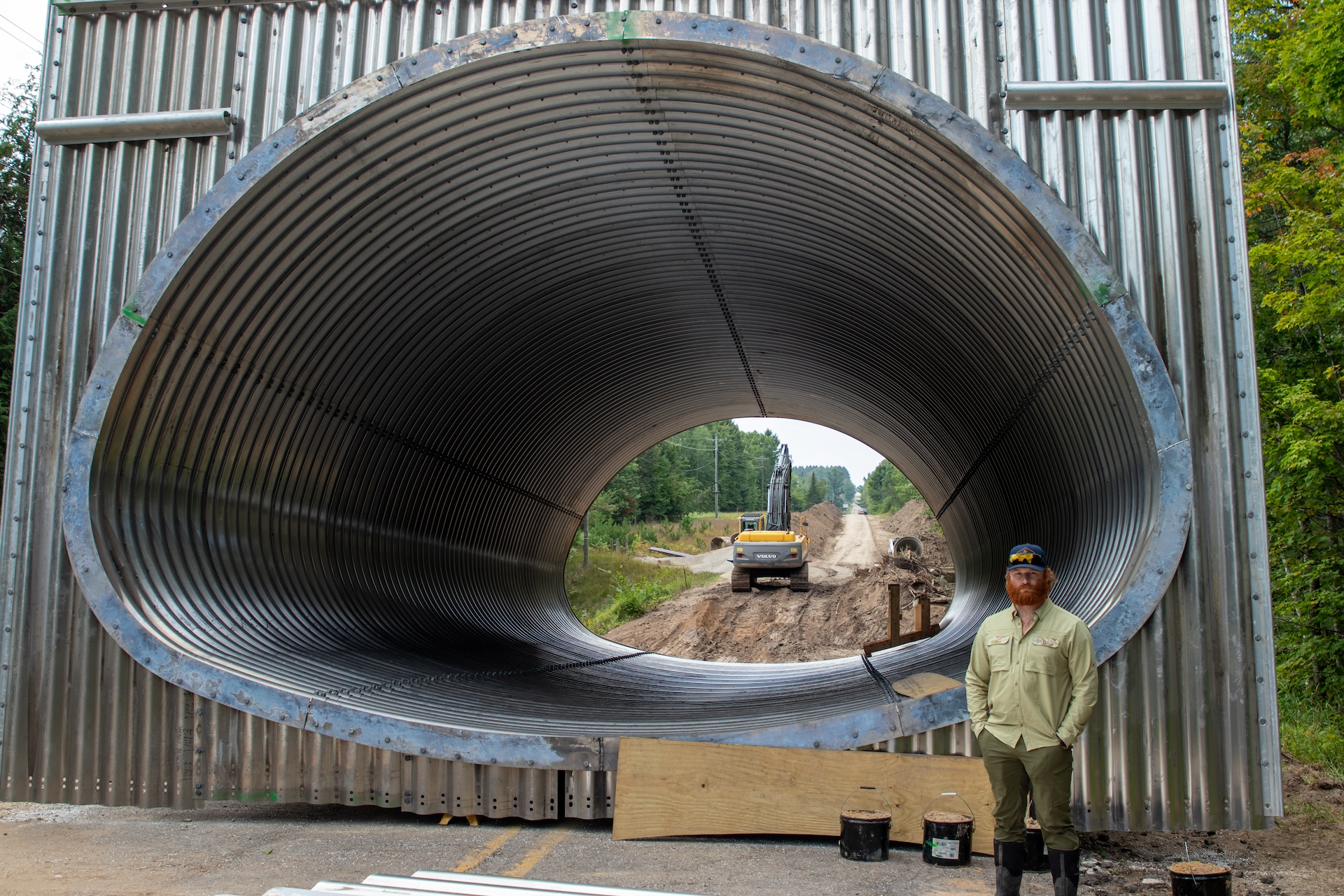
During Construction: Maple Creek & Sharon Road (Summer 2026) – CRA Project Manager Keenan Cooper stands beside the massive new stream crossing structure, designed to restore natural streamflow, improve fish passage, and strengthen road infrastructure.
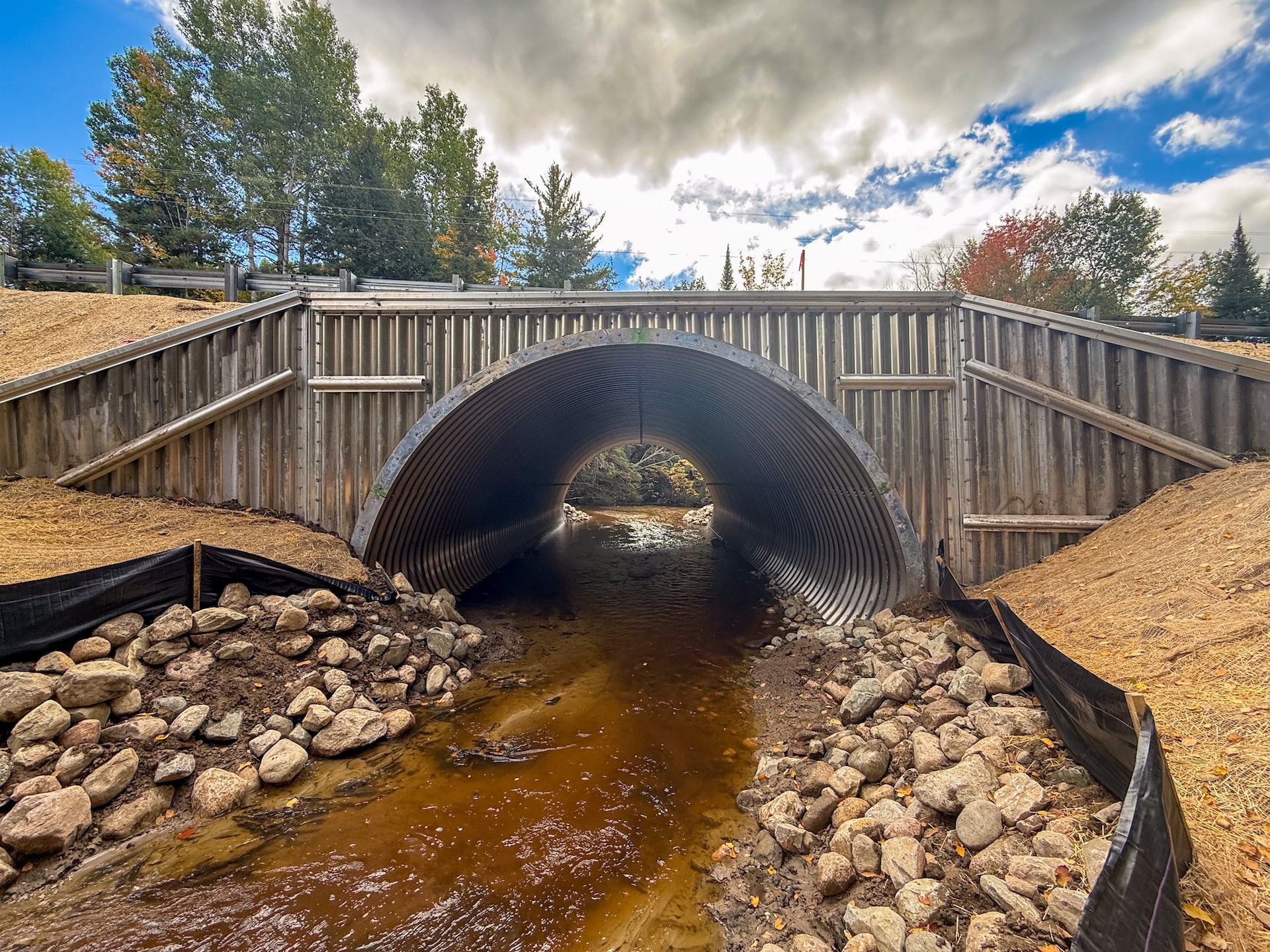
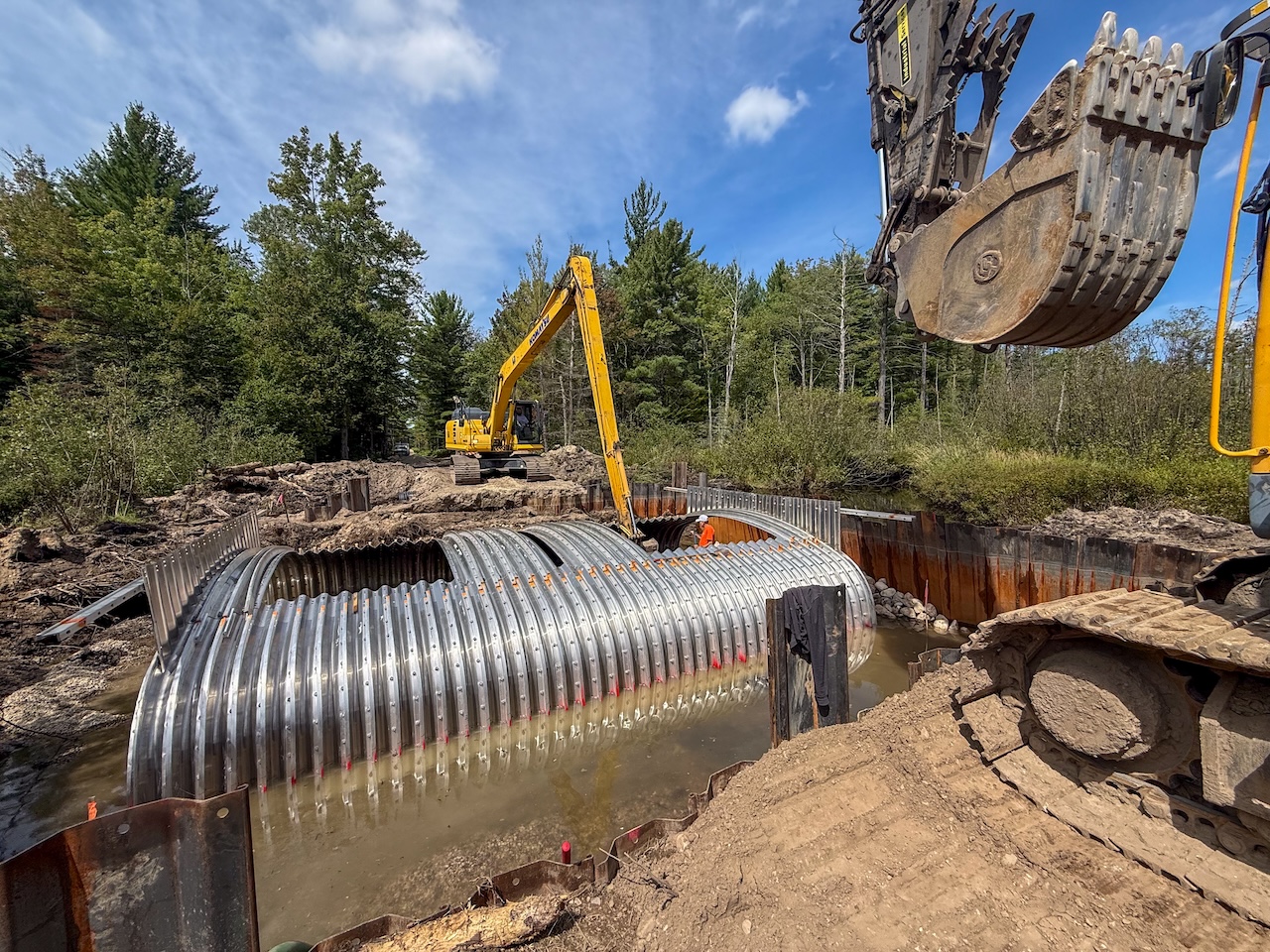
During Construction: Tributary to the North Branch Manistee River & Grass Lake Road (Fall 2026).
Supporting Michigan’s Arctic Grayling Restoration
This project is also helping support one of Michigan’s most exciting conservation initiatives—the return of Arctic grayling to their historic range.
Once abundant throughout northern Michigan, Arctic grayling disappeared from the state by 1936 due to habitat loss, river fragmentation, overharvest, and changing land use. Today, the Michigan Arctic Grayling Initiative—a partnership led by the Michigan Department of Natural Resources, Tribal Nations, universities, and conservation organizations—is working to restore self-sustaining populations using modern science and habitat restoration.
In 2025, the initiative reached a major milestone when approximately 400,000 Arctic grayling eggs were transferred to Tribal partners and placed into remote-site incubators within the North Branch Manistee River, Maple River, and Boardman-Ottaway River watersheds. Unlike earlier stocking efforts, this approach allows grayling to hatch and imprint naturally within the streams where they may eventually return to spawn.
While Conservation Resource Alliance is not directly involved in the reintroduction of Arctic grayling, our role is to restore the healthy, connected river systems that all native fish and wildlife depend upon. By removing barriers and improving aquatic connectivity, these projects help create resilient watersheds capable of supporting brook trout, salmon, steelhead, freshwater mussels—and, potentially, the successful return of Arctic grayling.
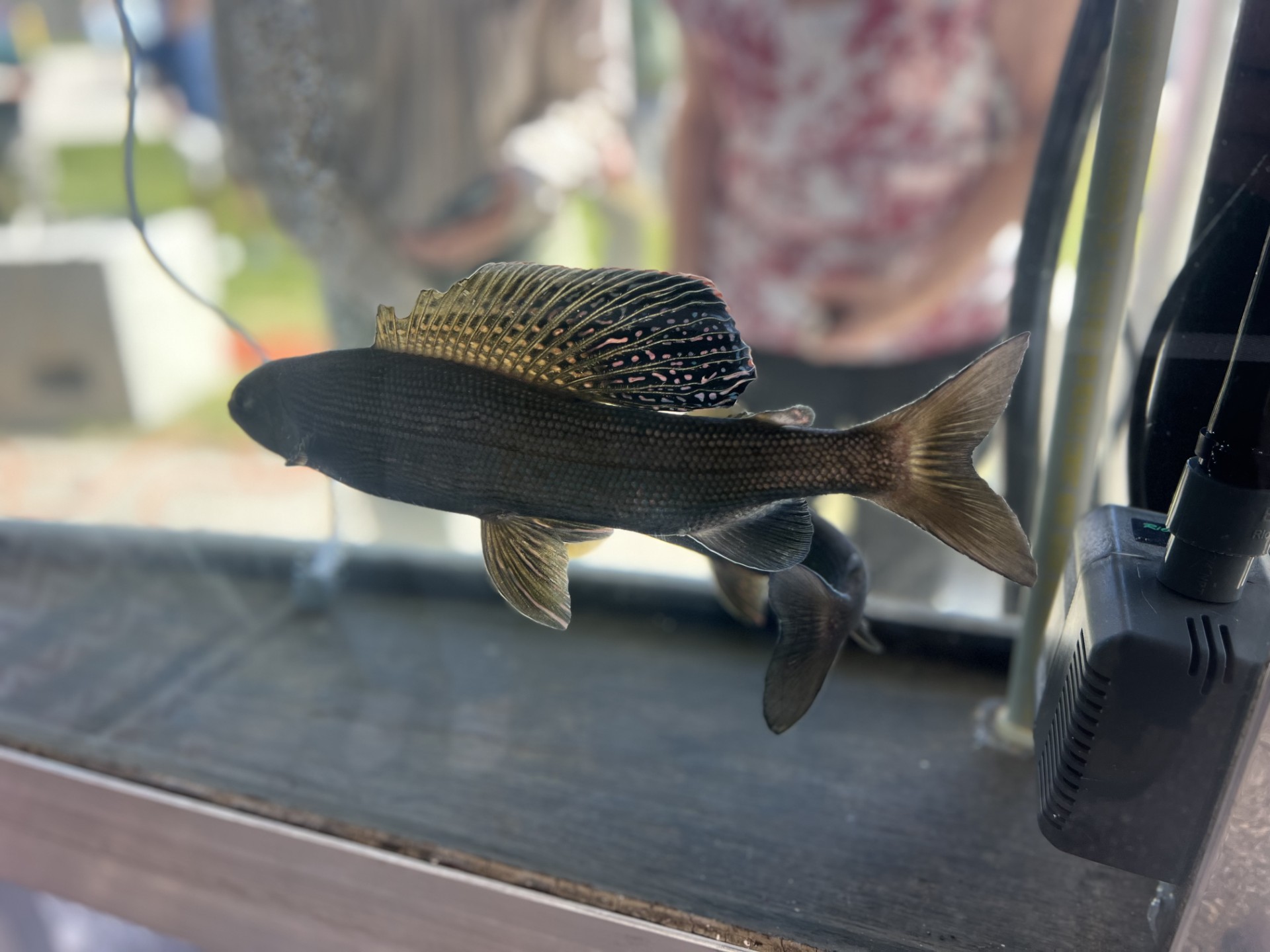
Arctic Grayling – Once native to Michigan’s coldwater rivers, Arctic grayling are the focus of ongoing reintroduction efforts. Restoration projects like these improve stream connectivity and habitat conditions, helping create healthier river systems that could support the successful return of this iconic species.
Project Partners & Funders
Projects like this are not possible without the help of our funders and partners.
We’d like to send a special thank you to:
Partners:
Kalkaska County Road Commission | Grand Traverse County Road Commission | Wexford County Road Commission | Grand Traverse Band of Ottawa and Chippewa Indians | Prein & Newhof (GTCRC) | Huron Engineering (KCRC) | KPM Engineering (WCRC)
Funders:
Michigan Department of Natural Resources | US Fish and Wildlife Service | National Fish and Wildlife Foundation | National Oceanic and Atmospheric Administration | Natural Resources Conservation Service – Environmental Quality Incentive Program
With support from River Care Funders: Packaging Corporation of America | DTE Foundation | Serra Family Foundation | Andrew R. and Janet F. Miller Foundation | Walters Family Foundation | The Brookby Foundation | Bells Brewery