
In 2025, Conservation Resource Alliance expanded our in-house capacity to better understand the health of the streams we work to restore. Through a series of fisheries surveys conducted across northwest Lower Michigan, our team collected critical baseline data on fish communities in advance of upcoming restoration projects.
Using backpack electrofishing methods, CRA biologists surveyed streams in the East Grand Traverse Bay, Little Manistee, Manistee, and Pine River watersheds, focusing on sites where road-stream crossing replacements and other habitat improvements are planned. These crossings—often undersized, perched, or misaligned—can fragment rivers, block fish movement, and degrade habitat over time.
What we found reinforces why this work matters.
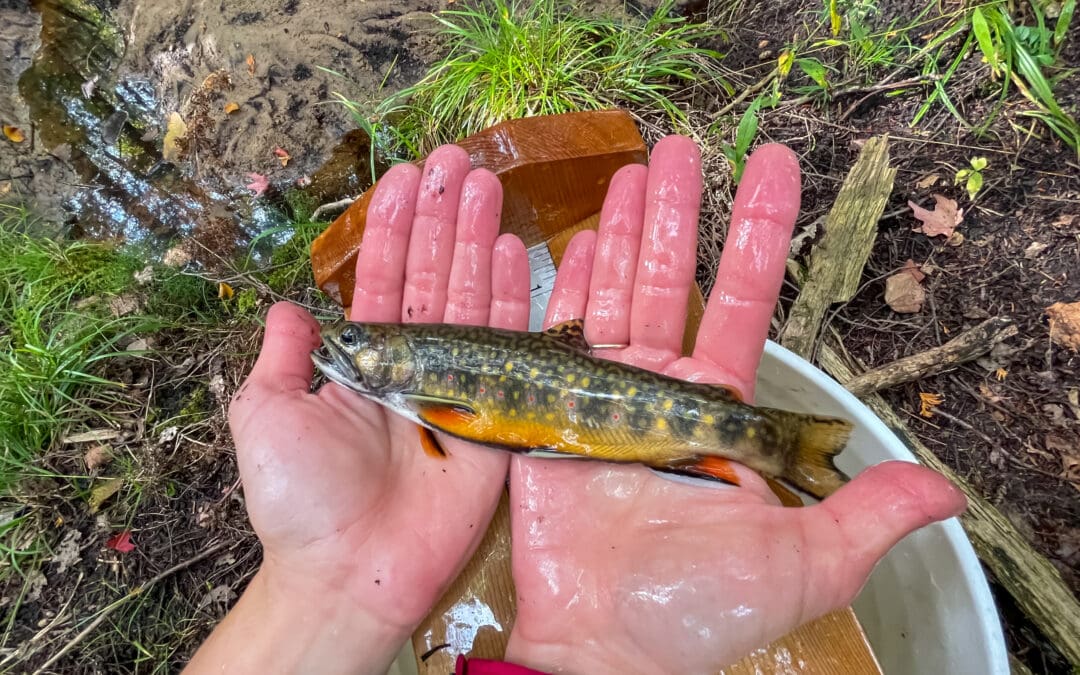
Coldwater streams throughout the region continue to support species like brook trout, a native fish that depends on clean, connected, and cold habitats to survive. But these species are especially vulnerable to fragmentation caused by failing infrastructure. In several locations, fish communities differed dramatically above and below road crossings—clear evidence that barriers are limiting movement and access to critical habitat.
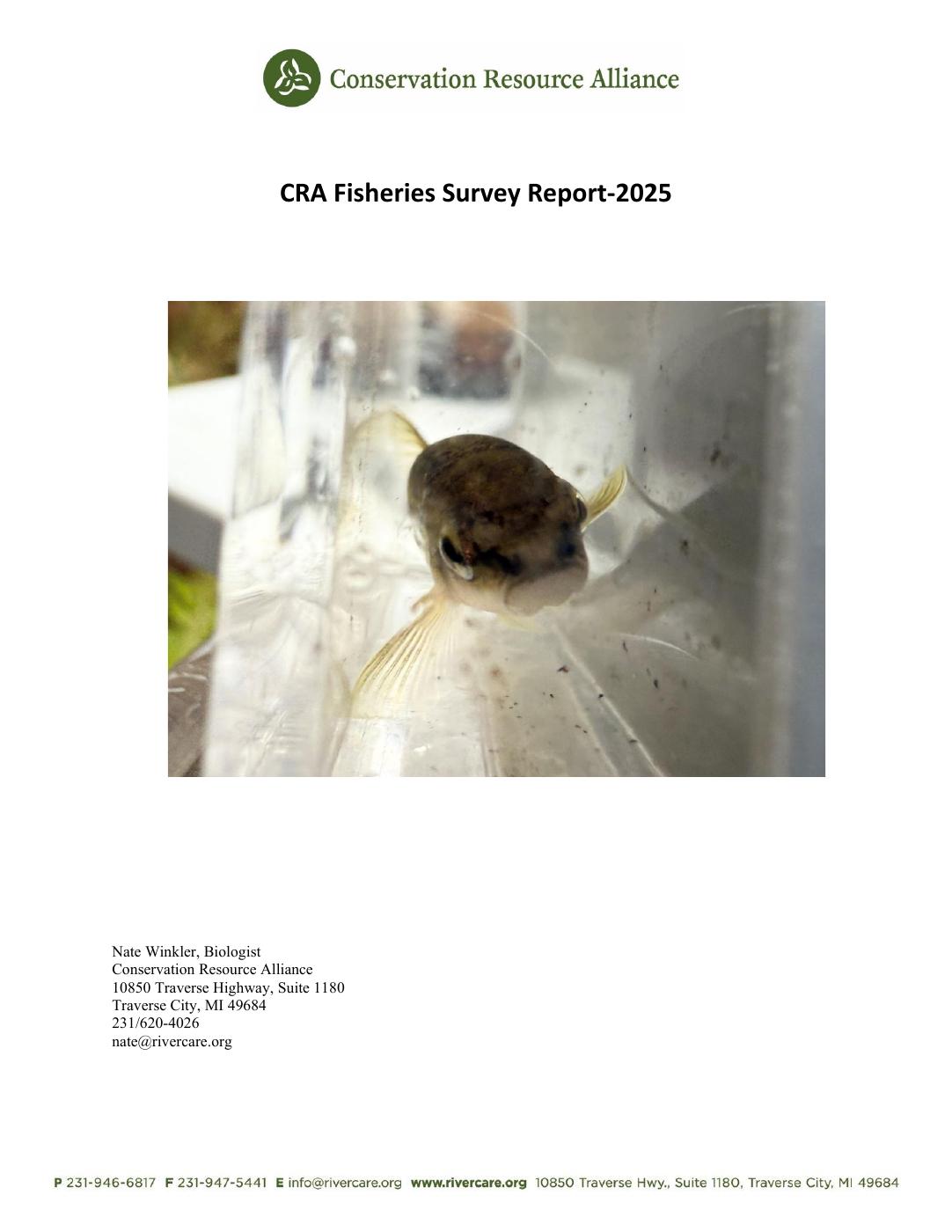
We also documented species like sculpin, indicators of high water quality, and even burbot, a rare find in small headwater streams. Meanwhile, central mudminnows were widespread, demonstrating the diversity of species relying on these systems. Together, these findings paint a detailed picture of how fish are using our rivers today—and where connectivity is breaking down.
This work is about more than data collection. By establishing a baseline now, CRA can return to these same sites after restoration to measure real, on-the-ground impact—tracking improvements in species diversity, size structure, and overall stream health over time.
As we continue restoring rivers across Northern Michigan, this kind of science-driven approach ensures that every project is informed, targeted, and measurable—helping us reconnect fragmented habitats and build healthier, more resilient river systems for the future.
👉 Read the full 2025 Fisheries Survey Report to explore the data behind this work.
© Copyright 2024 Conservation Resource Alliance