
Reclaiming Buried Wetlands at the Maple River Confluence
Project Highlights
Project Type
Wetland Restoration
Number of Wetland Acres Restored
8.5 Acres
Location of Project
Maple River Township, Emmet County
Wildlife to be Benefited
Birds (waterfowl, wading birds, shorebirds, marsh birds), reptiles (snakes, turtles, five-lined skink), amphibians (frogs, toads, salamanders), mammals (muskrat, beaver, river otter, mink), macroinvertebrates (stoneflies, mayflies, caddisflies, crustaceans such as crayfish and snails, other insects and spiders, including the endangered Hungerford’s crawling water beetle), and pollinator species (birds, butterflies, bees).
Maple Wetland Restoration
Project Overview
From River Reconnection to Wetland Restoration
Beginning in 1999, CRA, in partnership with multiple project collaborators, led decades-long restoration efforts in the Maple River watershed. This work culminated in 2024 with the publication The Maple: A River Freed, marking a major milestone in watershed-scale stream restoration. Through the Free-Spanning the Maple River Initiative, 21 projects helped restore connectivity and ecological function across the watershed, including stream-crossing replacements, in-stream habitat improvements, and the removal of the Lake Kathleen Dam.
Following the removal of the Lake Kathleen Dam in 2018 and the replacement of the undersized Woodland Road crossing with a full-span timber bridge, the Maple River flowed freely for the first time in more than 100 years. With full connectivity restored, restoration efforts shifted toward in-channel enhancements and riparian restoration of wetlands revealed after Lake Kathleen was dewatered. These wetlands play a critical role in the river’s long-term health and resilience by increasing groundwater storage, improving water quality, and providing essential wildlife habitat.
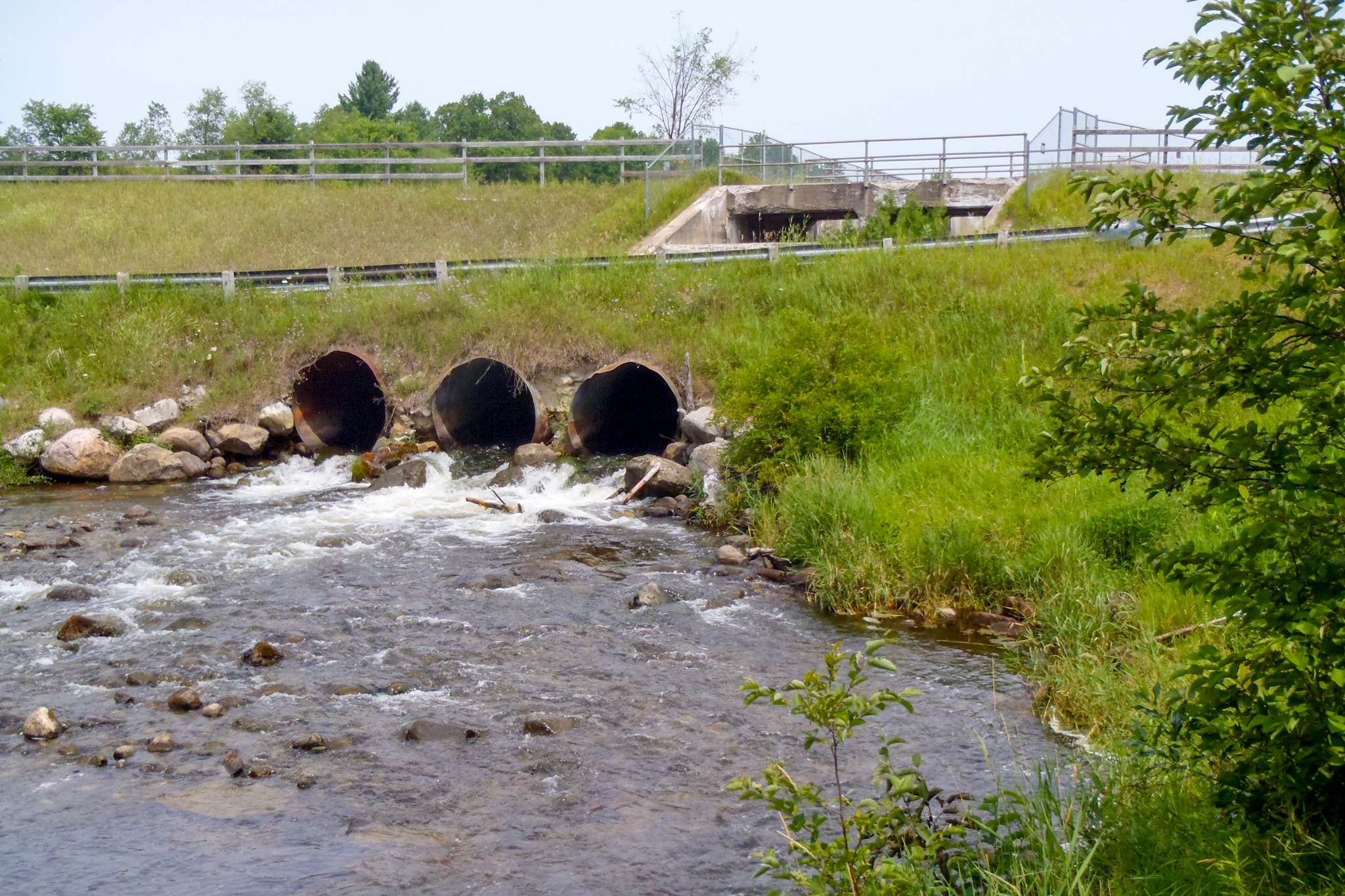
Before: The former Lake Kathleen Dam and undersized stream crossing at Woodland Road.
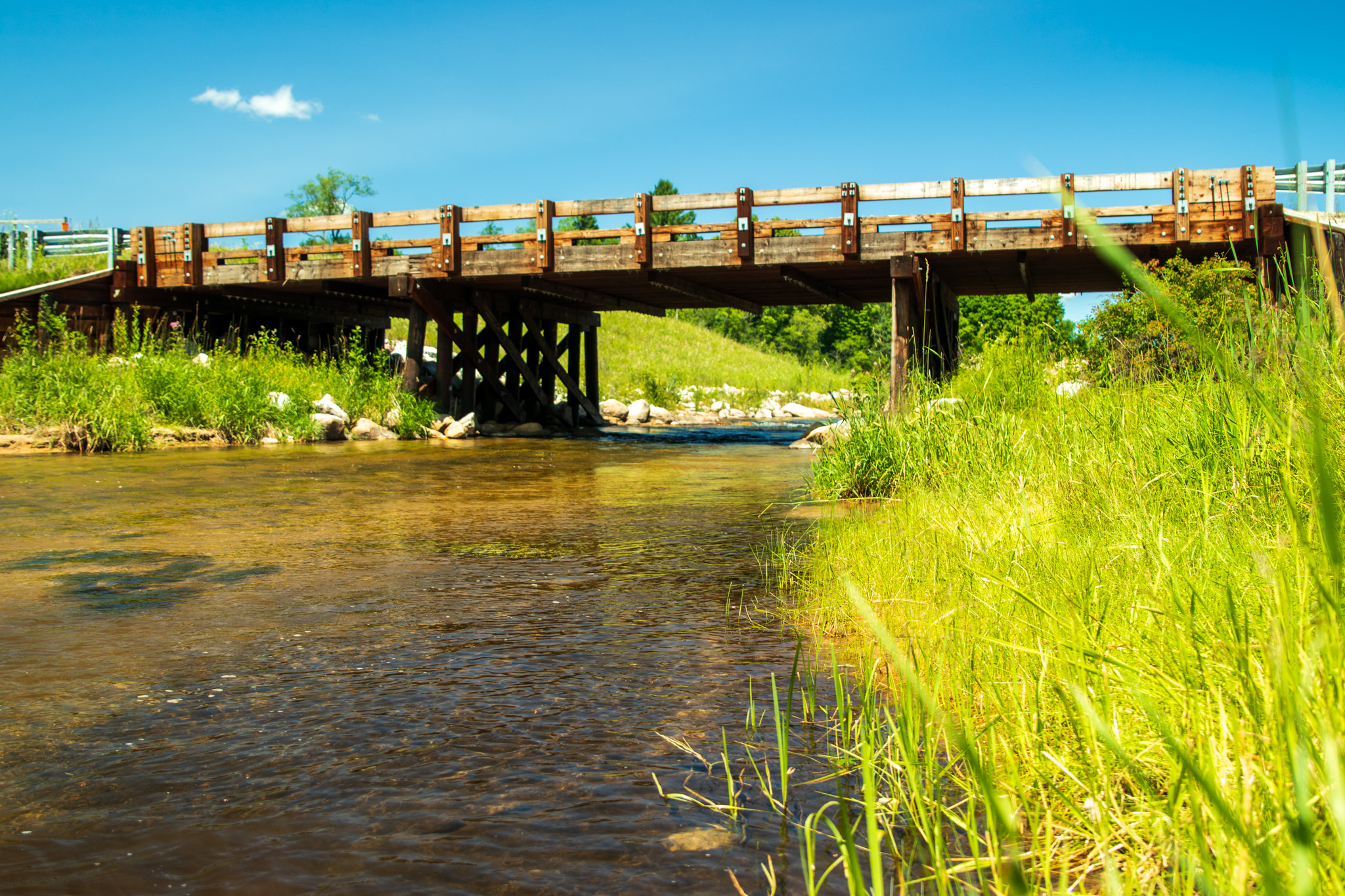
After: Lake Kathleen Dam removed and the stream crossing replaced with a full-span timber bridge.
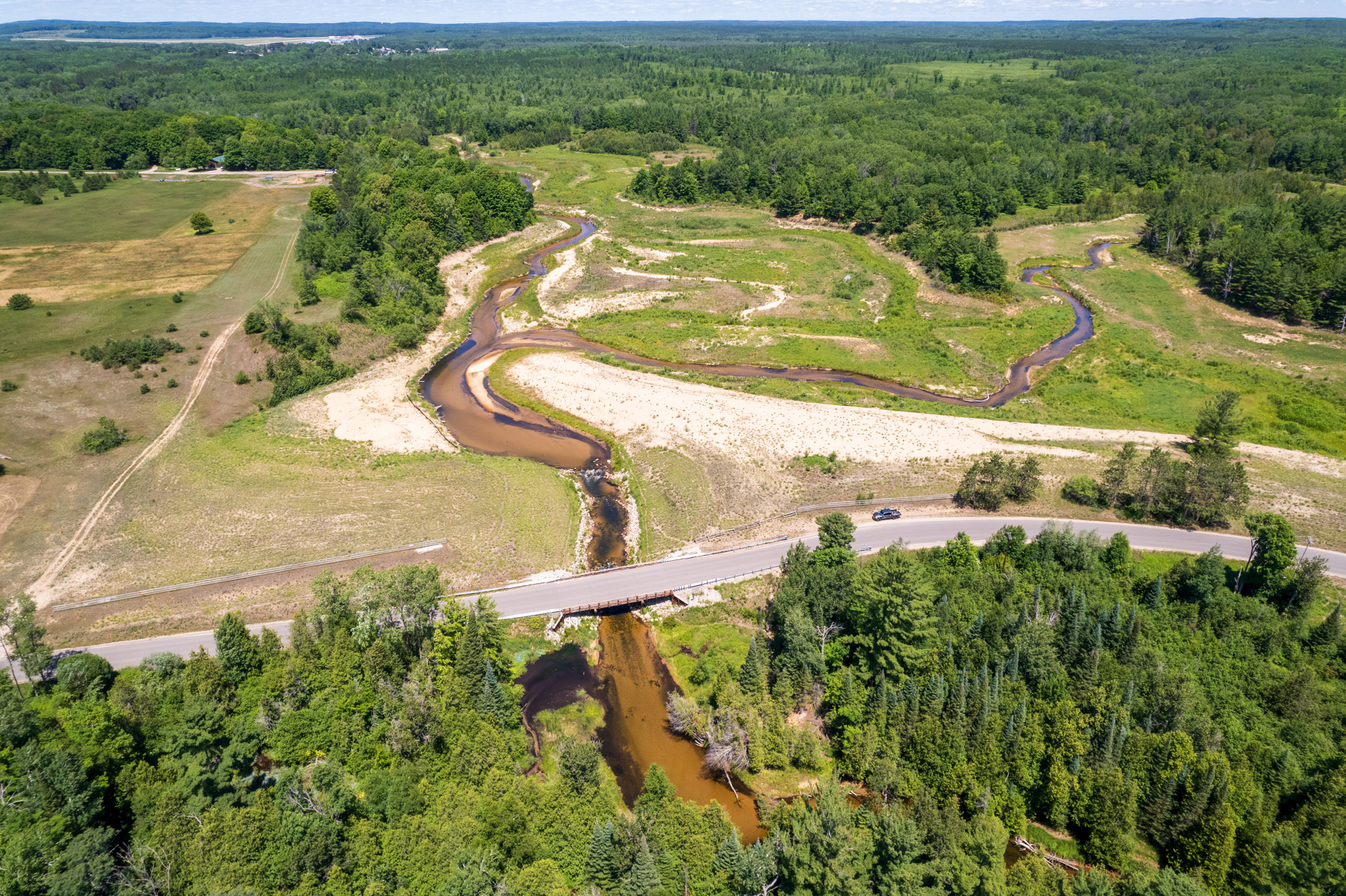
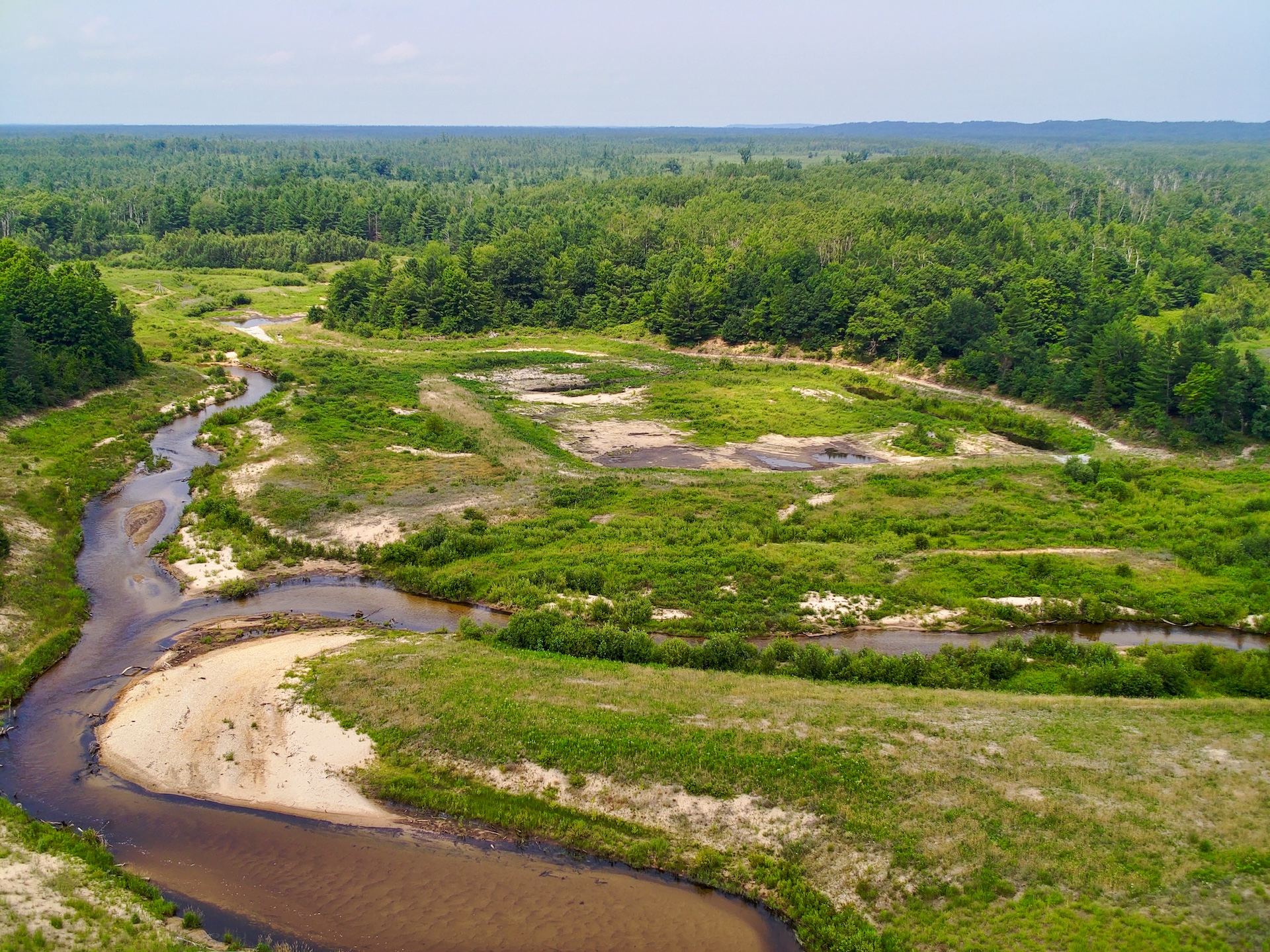
Before wetland restoration: The wetland site at the confluence of the Maple River’s East and West Branches.
Wetland Restoration by the Numbers
This large-scale restoration project benefits approximately 8.5 acres of wetlands at the confluence of the Maple River’s East and West Branches. Using excavators, skid steers, dozers, and Morooka tracked carriers, crews removed more than 2,400 cubic yards of accumulated sediment from low-lying areas and placed it on designated upland sites.
During excavation, groundwater seeps and organic soils were uncovered after being buried beneath sand sediments that had accumulated over more than a century of impoundment. Following site contouring and excavation to expose buried soils and define ponding areas, on-site organic materials were redistributed across the site, creating a suitable planting medium. In total, more than five acres of riparian habitat were seeded with a diverse mix of native pollinator and grass species.
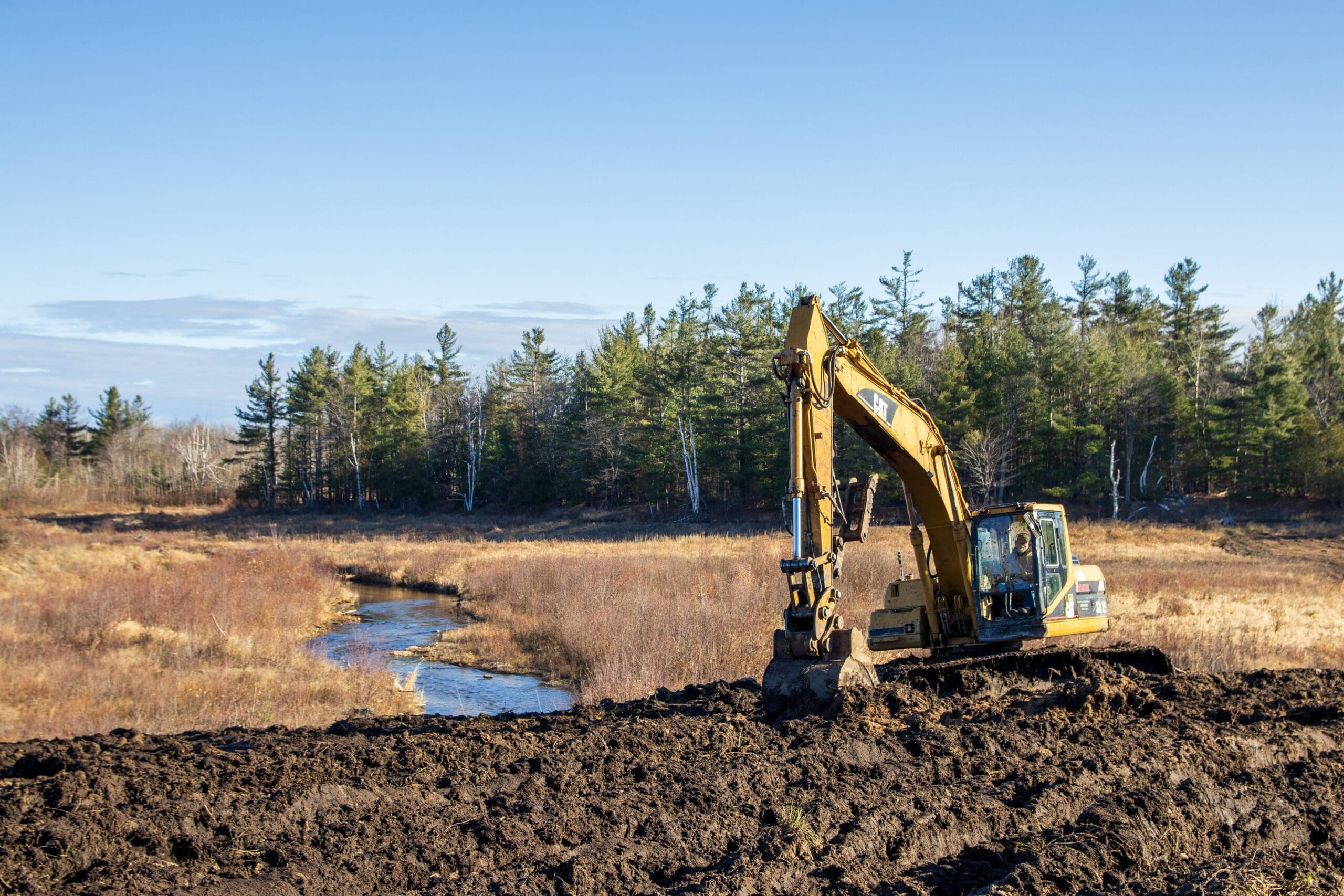
Heavy equipment shapes the landscape during wetland restoration.

Project staff walk the site as wetland restoration work gets underway.
Re-Shaping the Former Lake Kathleen Basin
This phase of restoration spans three interconnected wetland areas, designated from north to south as Wetlands 1, 2, and 3. Along the West Branch, Wetland 1 encompasses a nearly 2.7-acre ponded area created through the excavation of approximately 860 cubic yards of sediment.
Located between the East and West Branches, Wetland 2 includes an approximately 3.8-acre ponded area formed by the excavation of roughly 400 cubic yards of sediment. Farther south along the East Branch, Wetland 3 represents the largest ponded feature of the project, where 1,163 cubic yards of sediment were excavated to create a 5.3-acre ponded area.
To manage water levels and inter-wetland flow, an Agri Drain water control structure was installed at the southern outlet of Wetland 1 to regulate capacity and direct flows south toward Wetland 2. Additional dikes, berms, and spillways were installed throughout the site to support effective water flow and retention across the system.
Moving upland from the river and wetlands, adjacent spoil areas were capped with on-site organic material and seeded with a native pollinator mix. Building on this work, spring 2026 planting plans will incorporate native shrubs and tree species along wetland fringes and throughout the riparian buffer.
Restoring Ecosystem Resilience
The ecological benefits of the work are realized almost immediately and will echo for generations to come, as multiple restoration outcomes take shape across the former Lake Kathleen basin. These efforts diversify habitat across exposed bottomlands, restore and enhance wetland ecosystems by expanding open-water areas interspersed with submergent and emergent vegetation, and cap sandy sediment spoils from the dam-impoundment era with organic-rich material to support healthy native plant growth.
Projects like this are not possible without the help of our funders and partners. We’d like to send a special thank you to:
Partners
Conservation Resource Alliance |US Fish & Wildlife Service | Twin Branch Property Owners – Rick & Lotsie Holton | Kanouse Outdoor Restoration | MI Department of Environment, Great Lakes and Energy (EGLE) | Elevated Media LLC. | Kirk Rose
Funders
USFWS Great Lakes Fish Basin Habitat Partnership Program, National Fish & Wildlife Foundation Sustain Our Great Lakes, USFWS Partners Program, Petoskey Harbor Springs Community Foundation, Oleson Foundation, Rick and Carlota Holton Family – Twin Branch Property Owners, CRA River Care Program Private Donors
With support from River Care Funders: Packaging Corporation of America | DTE Foundation | Serra Family Foundation | Andrew R. and Janet F Miller Foundation | Walters Family Foundation | The Brookby Foundation | Bell’s Brewery